The Optimal Diet for Human Health

Caitlyn Davey • July 8, 2025

Last week what spoke about what I believe what health really is, so let's go deeper again and try and find the optimal diet for human health as backed by research. You’ve heard everyone spouting shit about what the best diet for fat loss and health is right? Ketogenic, high carb, low carb, paleo, high protein, plant-based, vegan etc BUT What if there wasn’t an optimal overall diet? Maybe we need to have a closer look at ancestral health & the blue zones around the world. What’s a blue zone you ask? Blue Zones are areas in which people have low rates of disease and live longer than anywhere else. Lomo Linda (California), Nicoya (Costa Rica), Sardinia (Italy), Icaria (Greece), Okinawa (Japan) What do these blue zones have in common, remember from last weeks email, it’s not all about nutrition. Physical activity Close knit community & family Sun exposure Less stress No smoking Religion & sense of purpose Less PollutionLet’s have a look at some fairly extreme diets around the world where the people seem perfectly healthy and without rates of obesity. The Kitavans on the Melanesian island follows a traditional, non-industrial diet. About 69% of their diet comes from Carbs, 10% Protein and 21% fat. Yet they having very low HDL (good cholesterol) levels and very low rates of cardiovascular disease.   The Aymara people (Chilean natives) 80% of their diet comes from the carbohydrate potato. They have extremely low rates of diabetes despite the extremely high intake of HGI Carbs. Maasai Tribe, men eat a diet consisting almost exclusively of high fat and protein consisting of milk, meat, blood and they rarely eat any vegetables. High calories over 3000 per day 66% from fat (33% from Saturated fat) and they consume 600-2000mg of cholesterol per day.  YET they have low levels of serum cholesterol and no evidence of heart disease. Now let’s have a look at the most famous case of a tribe being westernised and how this affected them. The Pimpa Indians, they traditionally lived off the land until irrigation water got diverted so they could no longer grow crops. The became dependant on government food programs providing white flour, sugar, partially hydrogenated lard and canned goods. They now have the highest rate of diabetes (38%) and one of the highest rates of hypertension and obesity of any population in the world! How very very sad is that. But why?Well, you are taking people who grew their own crops and lived naturally off the land, their food was nutrient-dense and their foods were extremely satiating. Now they have been given highly palatable foods with low satiation whenever they want them. They eat for pleasure in the absence of an energy deficit.These people above have possibly genetically adapted to that way of living. But you can see all their diets are vastly different. Some extreme high fat like the Inuits (75% fat) some are high carb, some don’t eat any vegetables.  So with all that said………………So how do we know what the optimal diet is? Well, the answer is there isn’t one. Nice one James, top marks I wanted a straight answer! LOL you won’t find one here. The answer is you need to eat to meet your energy requirement while having an underlying principle of a good Macronutrient breakdown (protein, fats and carbs) and micronutrient intake (vitamins and minerals). But if any diet worked perfectly for everyone, trust me the world wouldn’t be in the shit pile it is surrounding food. You see it really doesn’t matter how you eat in theory, the optimal diet is the one you can adhere to the best, it is as simple as that.I think we can take a lot away from the blue zones, they get sunlight each day, they have a connection with family and a sense of purpose, they smoke less, they stress less they are very active and they eat a less westernised diet.  If I was going to say what a ‘good balanced’ overall diet would be for westerners of the world. It would be:Limit refined starches Limit added sugar limit processed foodsLimit certain processed fats (Trans) Eat meats, fish, poultry, seafood, whole grains, vegetables and fruits.  Eat some of your favourite foods ?The key word there is the limit, not eradicate all together. Still, have the foods you always enjoy, that is what keeps up adherence and allows sustainability in life & what the fuck is life without some bloody chocolate or crisps (UK crisps of course, Australia crisps suck and they call them chips WTF). Anyway, I digress.You see everyone needs something a little bit different in their diet depending on a factor of different things, but the diet should be built around your lifestyle and values, your life should not be built around your diet.

Previous Blogs
February 16, 2026
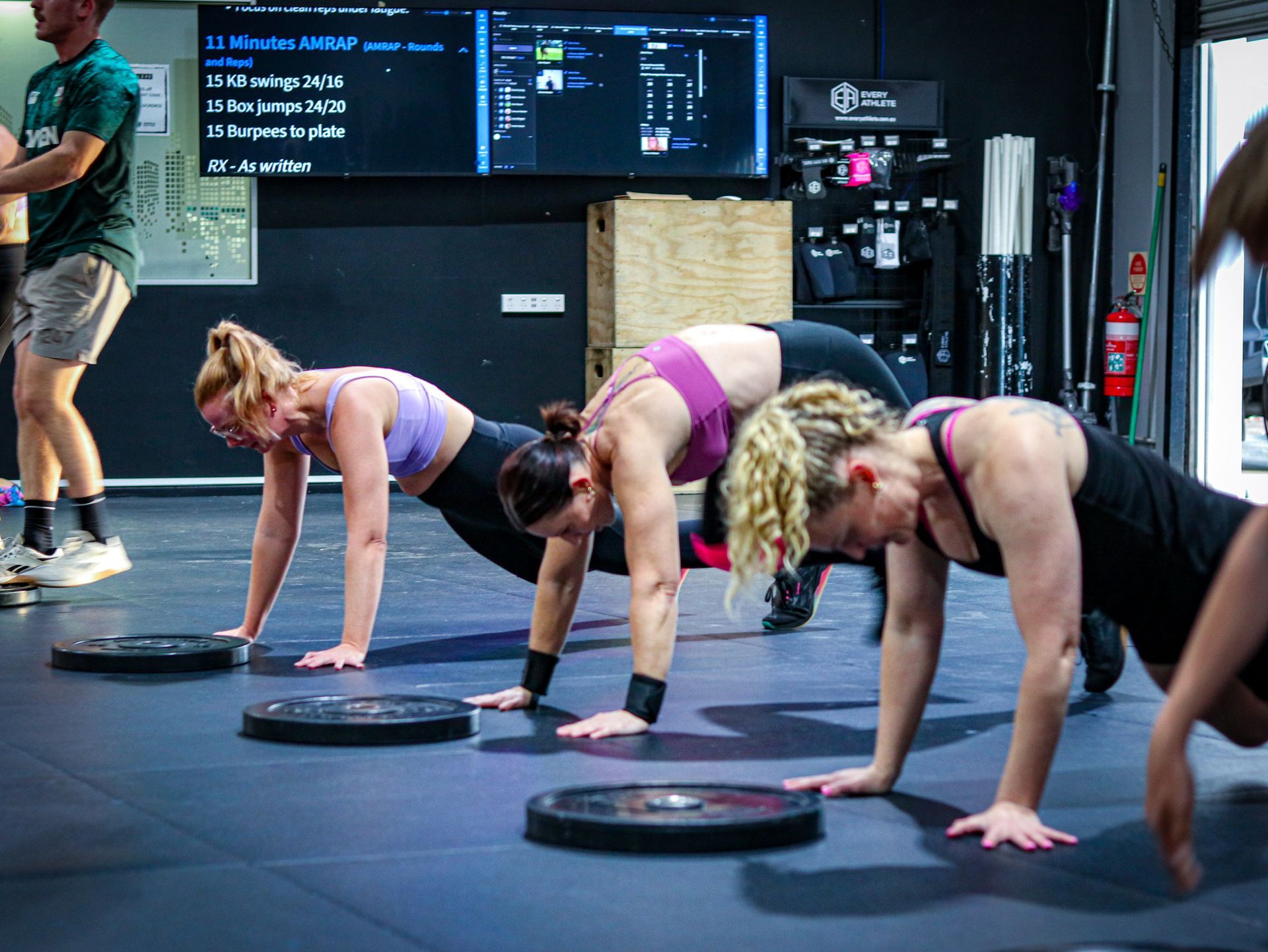
If you live in Wynnum or Capalaba, you’re not short of fitness options. There are 24-hour gyms. Bootcamps. HIIT studios. Yoga classes. Running clubs along the waterfront. But despite more access than ever, many people still feel stuck. Tired. Plateaued. Unsure whether what they’re doing is actually working. For many adults across Brisbane’s bayside suburbs, the missing piece isn’t more cardio or more intensity. It’s structured strength training. What Strength Training Actually Does (Beyond “Toning”) Strength training isn’t just about lifting heavy weights or looking muscular. It is one of the most well-supported interventions in exercise science for improving: • Lean muscle mass • Bone density • Insulin sensitivity • Resting metabolic rate • Functional capacity • Injury resilience When you lift weights progressively, your body adapts. Muscle fibres increase in size. Neural drive improves. Connective tissue strengthens. Bone responds to load. This isn’t aesthetic. It’s physiological. For adults in their 30s, 40s and 50s — especially busy professionals and parents — maintaining and building muscle becomes increasingly important. From around age 30 onwards, we gradually lose muscle mass if we don’t train against resistance. Strength training slows — and can even reverse — that decline. Why Many People Plateau in Traditional Gyms Joining a gym in Wynnum or Capalaba is easy. Progress is harder. Many people follow random workouts. They jump between machines. They try classes without a long-term plan. They train hard, but without structure. The body adapts quickly to repeated stimulus. If load, volume or intensity don’t increase over time, adaptation stalls. This principle is called progressive overload — and it is fundamental to strength development. Without it, workouts feel hard but don’t necessarily lead to measurable progress. That’s why tracking lifts, planning training blocks, and adjusting volume matter. Effort is important. Structure is essential. Strength vs “Burning Calories” A common goal across the Wynnum and Capalaba community is fat loss. Many people default to high-intensity cardio to “burn more calories”. While cardiovascular training improves heart health and work capacity, resistance training changes body composition in a different way. Muscle tissue is metabolically active. The more lean mass you maintain, the more energy your body requires at rest. Strength training also improves glucose regulation and insulin sensitivity, which influences how your body uses carbohydrates. In simple terms: Cardio burns calories during the session. Strength training improves how your body uses energy long term. The most effective approach often combines both — but strength should not be overlooked. The Importance of Coaching in Strength Training Not all training environments are equal. There is a difference between access to equipment and access to coaching. Research in motor learning consistently shows that technique improves faster and more safely when feedback is specific and timely. Good coaching reduces injury risk, improves force production and builds confidence under load. For beginners, this means learning correct movement patterns. For experienced lifters, this means refining efficiency and progressing safely. In both Wynnum and Capalaba, more people are moving away from “do it yourself” gym models and towards coached environments that prioritise progression and accountability. Because consistency — not intensity — predicts long-term success. Strength Training for Real Life The real benefit of strength training isn’t what happens in the gym. It’s what happens outside it. Carrying children. Lifting groceries. Walking the stairs without fatigue. Reducing back pain. Improving posture after long desk hours. Strength improves quality of life. For people living and working in Brisbane’s bayside suburbs — balancing work, school runs and community commitments — training needs to support life, not compete with it. Two to four well-programmed sessions per week is enough to create significant improvements in strength and body composition when done consistently. You do not need to train every day. You need to train intelligently. What To Look For in a Strength Training Gym in Wynnum or Capalaba If you’re considering starting strength training locally, look for: • Structured programming rather than random workouts • Progressive overload built into sessions • Coaches who adjust for injury, mobility and experience • A community that supports consistency • A clear pathway for beginners Strength training should feel challenging — but sustainable. It should build confidence, not intimidation. A Quiet Shift in Fitness Across Wynnum and Capalaba, there is a noticeable shift. People are moving away from extreme short-term “transformations” and towards long-term strength development. They want: Energy that lasts. Bodies that feel capable. Training that fits into real life. Strength training isn’t a trend. It is one of the most researched, effective and sustainable forms of exercise available. If you’ve tried everything else and still feel stuck, it might not be motivation you’re missing. It might be structure. And structure changes everything.
January 19, 2026
If you’ve been thinking about getting back into training — or starting properly — this is your chance. From February 2–8 , you can train free for a full week at Rebuild Capalaba with unlimited access to our group sessions. No pressure. No judgement. No gimmicks. Just well-coached training, intelligent programming, and a community built around progress — not perfection. What Free Week Includes • Unlimited group training for 7 days • Coaching-led strength, conditioning, and cardio sessions • Scaled options to suit all experience levels • A supportive, ego-free training environment Whether you’re returning after a break, testing something new, or simply curious about what training should feel like — Free Week lets you experience it properly, without committing upfront. Free Week runs Feb 2–8. Spots are limited. Book your week and see how it fits into your life.
November 24, 2025
Try a Session. Meet the Coaches. See What You’re Capable Of If you’ve been thinking about starting, restarting, or finding a gym that actually supports you — Taster Day is your opportunity. This is a free, one-day event designed for real people. No pressure. No expectations. Just great coaching, a welcoming community, and a chance to see whether Rebuild is the right fit for you. December 6, 7:30am at Rebuild Health and Fitness - 10 North Road Wynnum West. This session is FREE for people to join.
More Posts